The Business Dangers of Confirmation Bias in Leadership
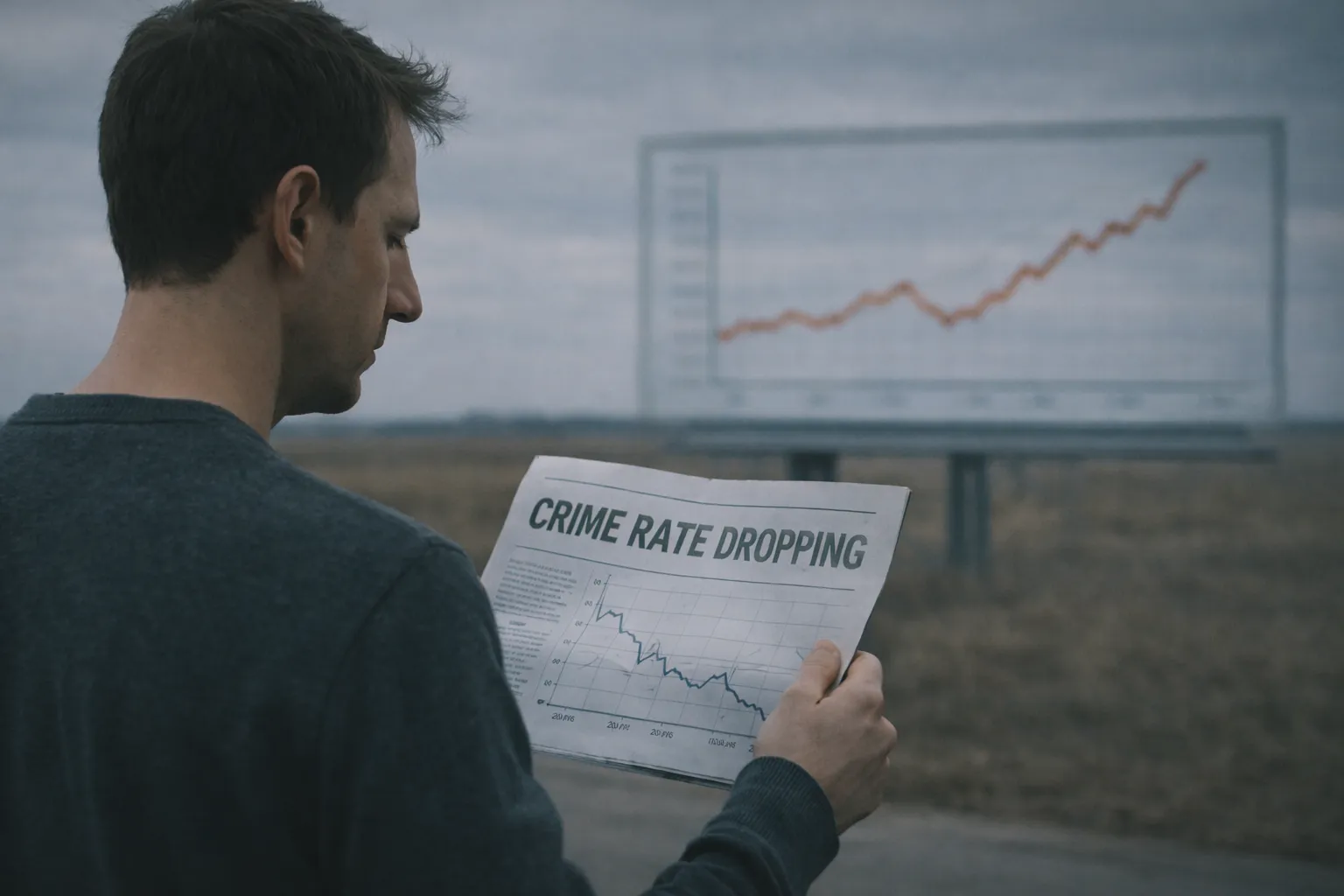
Confirmation bias is not merely an individual reasoning error; in leadership it becomes an organisational risk multiplier. When leaders selectively notice, interpret, and remember information that supports their prior beliefs, they can distort strategy, weaken governance, and create cultures where inconvenient truths go unreported.
Confirmation bias is the tendency to seek, interpret, and privilege information that supports an existing belief while discounting or neglecting disconfirming evidence. In leadership contexts, it often appears as a preference for reassuring metrics, friendly narratives, and familiar explanations—particularly when stakes are high and accountability is personal.
The business danger is structural: leaders shape incentives, attention, and communication norms. When a leader is biased toward a particular strategy or narrative, the organisation learns to supply confirming evidence and withhold contradiction. This creates an information environment that is systematically less truthful over time.
Strategic lock-in and escalation of commitment
A common pathway from confirmation bias to financial loss is strategic lock-in. Leaders may interpret early signals as proof of correctness while attributing contrary signals to temporary noise. This framing encourages escalation of commitment: doubling down on a failing initiative because abandoning it would contradict prior judgement and incur reputational cost.
Over time, resources concentrate around a story rather than around evidence. The result is delayed course correction, inflated opportunity cost, and increased exposure to downside risk.
Governance failures and distorted risk perception
Boards and executive teams depend on accurate, balanced information to govern well. Confirmation bias can corrupt this process by shaping what is reported, how it is interpreted, and which risks are treated as credible.
Two patterns are especially damaging:
- Selective reporting that emphasises supportive indicators while minimising warning signals
- Premature certainty that treats ambiguous evidence as decisive when it aligns with preferred conclusions
This is how organisations miss inflection points until the cost of change becomes extreme.
Cultural effects: fear, silence, and learned compliance
Leadership confirmation bias is rarely contained at the top. It becomes cultural when teams learn that disagreement is punished and agreement is rewarded. Employees adapt by presenting information in ways that match leadership expectations, even when reality is more complex.
This produces reduced psychological safety, fewer dissenting views, later detection of failures, and overconfident planning.
Operational consequences: weaker decisions at speed
Under time pressure, leaders rely more on heuristics and less on deliberate evaluation. Confirmation bias becomes more potent when uncertainty is high and personal identity is tied to being right. Decision quality degrades precisely when it matters most.
How our coaching can help
Our critical-reflection coaching helps leaders directly address confirmation bias by making their reasoning visible, examinable, and correctable.
In a reflection session, we focus on:
- Challenging confidence and promoting a strong alignment between confidence and evidence.
- Identifying favoured narratives and untested assumptions.
- Actively generating disconfirming evidence and alternative explanations.
- Reducing defensiveness by separating identity from judgement.
- Introducing belief stress-testing.
- Improving epistemic humility.
The goal is not scepticism for its own sake, but reliable leadership judgement under uncertainty.
Contact us today
Sources
- Nickerson, R. S. (1998). Confirmation Bias: A Ubiquitous Phenomenon in Many Guises. Review of General Psychology.
- Kahneman, D. (2011). Thinking, Fast and Slow. Farrar, Straus and Giroux.
- Tversky, A., & Kahneman, D. (1974). Judgment under Uncertainty: Heuristics and Biases. Science.
- Janis, I. L. (1972). Victims of Groupthink. Houghton Mifflin.
- Staw, B. M. (1976). Knee-deep in the Big Muddy: A Study of Escalating Commitment. Organizational Behavior and Human Performance.
- Tetlock, P. E. (2005). Expert Political Judgment. Princeton University Press.